Maritime History
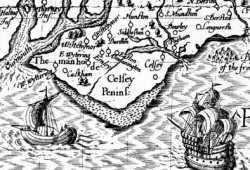
For most of its history, Sussex has been an agricultural county. The Chichester area, with the fertile coastal plain for arable and the Downs for sheep and cattle grazing, has long been one of the richest in agricultural terms. Just as the medieval sea trades were based on wool, Chichester Harbour’s sea trade from the 17th to the early 19th centuries was based in one way or another on grain, much of it transported around the English coast by coastal shipping.
The city of Chichester did not have a direct connection to the sea until the construction of the Chichester Canal between 1818 and 1822. However, for centuries before this, Chichester had its own port, located at Dell Quay.
The actual quay at Dell Quay is said to have been built or rebuilt in about the 1530s or 1540s. In 1580 it was substantial structure, 90 ft (27 m) long and 49 ft (15 m wide).
Dell Quay was the only place in Chichester Harbour legally allowed to receive foreign trade, but there were other places in and near the Harbour that were also used to load and unload ships used in the English coastal trade:
One of these was Wittering, which covered the area between Selsey and Pagham, to Sidlesham Mill. Smuggling was also carried on in various parts of the Harbour and on the coast.
 The following document contains rough background notes for a talk recounting the maritime history of Chichester Harbour and nearby areas by Ian Friel, former Principal Curator of Chichester District Museum, now The Novium. The notes were written prior to a History tour on Solar Heritage, the Solar Boat run by Chichester Harbour Conservancy. Ian is seen here on the Solar boat commenting about the village of Bosham.
Click on the notes below and find out how historic sea trade round the Manhood Peninsula fits into the wider context of local maritime activity.
Maritime History of Chichester Harbour
Archaeology, History & Culture

The history of the Manhood Peninsula and its settlements is long enough to include Early Man and the Romans. The area has been in active use for millennia and can boast walks and cycling, woods and fields. You can go back even further in time by discovering the fossils of Bracklesham Bay. Find out more about the archaeology and history of the... Read More»
Archaeology at Medmerry
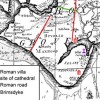
Medmerry, the country's first and largest open coast managed re-alignment scheme, is located south of Chichester. The site is managed by the RSPB together with Pagham Harbour, however the scheme itself was built by the Environment Agency as a flood defence work for Selsey and the Manhood peninsula. During the build a great deal of important archaeology was discovered that rewrote... Read More»
Marl Pits
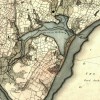
The Manhood Peninsula was a source of marl until the late 18th century, and marl found in Selsey was considered some of the best available. Marl has been defined as a pit from which marl, a mixture of clay and carbonate of lime, is excavated. Marl was commonly used as a fertilizer and marl pits were at one time... Read More»