Manhood Peninsula Partnership Caring for Chichester’s Coastal Communities. The Manhood Peninsula Partnership was inspired by local residents to promote a sustainable way forward for addressing the environmental, social and economic challenges posed to the area by climate change.
Manhood Peninsula Partnership Coastal Management A large part of the Manhood is less than 5m above sea level and at risk from flooding, both inland and coastal. It is likely that climate change will increase this risk, through rising sea levels, rising water tables and increased precipitation intensity. Drainage is an increasing problem in the Manhood as the existing ditches are proving inadequate to handle increased run-off resulting from recent development and heavier rainfall. Plans...
Manhood Peninsula Partnership Climate Change The Manhood Peninsula is particularly vulnerable to the effects of climate change including rising sea levels, rising water table, and more intense precipitation. As a result, the MPP has been working closely with the community to raise levels of awareness and to help produce adaptation plans. These include: practical adaptations funded through a Community Grant Fund including the installation of cycle racks at East Wittering School; the provision of water butts...
Manhood Peninsula Partnership History The Manhood Peninsula Partnership was formed in 2001 following concerns raised among local residents about the need for greater co-ordination between the bodies and organisations responsible for the management of the Peninsula and their ability to work with local people to address present and future environmental, social and economic challenges. The MPP was formed in July 2001 as a direct result of a 5 -day workshop organised by local residents...

Manhood Peninsula Partnership

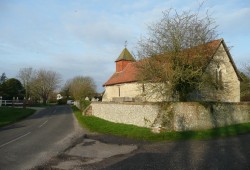
Earnley

Earnley
© Copyright Basher Eyre and licensed for reuse under this Creative Commons Licence.

The civil parish of Earnley is three miles long from north to south and a mile and a quarter wide. It boasts a two and a half mile coastline stretching from West Sands, Selsey to Bracklesham.

There is a current population of approximately 450, living mainly in the village of Earnley and the hamlets of Almodington and Somerley.

The name Earnley means ‘eagle clearing’ and first appears in 780, before the current village came into existence. The parish church in the village, which has no patron saint, dates from the 13th century.

The settlement and manor of Somerley (summer clearing) dates from the Anglo-Saxon period and was first mentioned in the Domesday Book in 1086.

Both settlements originated from clearings in the Maene Wudu (woodland held in common), which gave its name to the Hundred of Manhood, whose meeting place and court house were in Somerley.

Almodington is first mentioned in 1166 as a farmstead, Almodintona (the farmstead of Ealhmod).

Most of the non-residential land in the parish in agricultural and horticultural; an RSPB reserve occupies Thorney Marshes at the seaward end of the parish.

Earnley is the Manhood parish principally affected by proposals for managed realignment and breaching of the shingle bank along the coastline.

Earnley’s primary concern is coastal protection and land drainage. A second but no less important concern is the speed, frequency and size of traffic using the rural lanes.